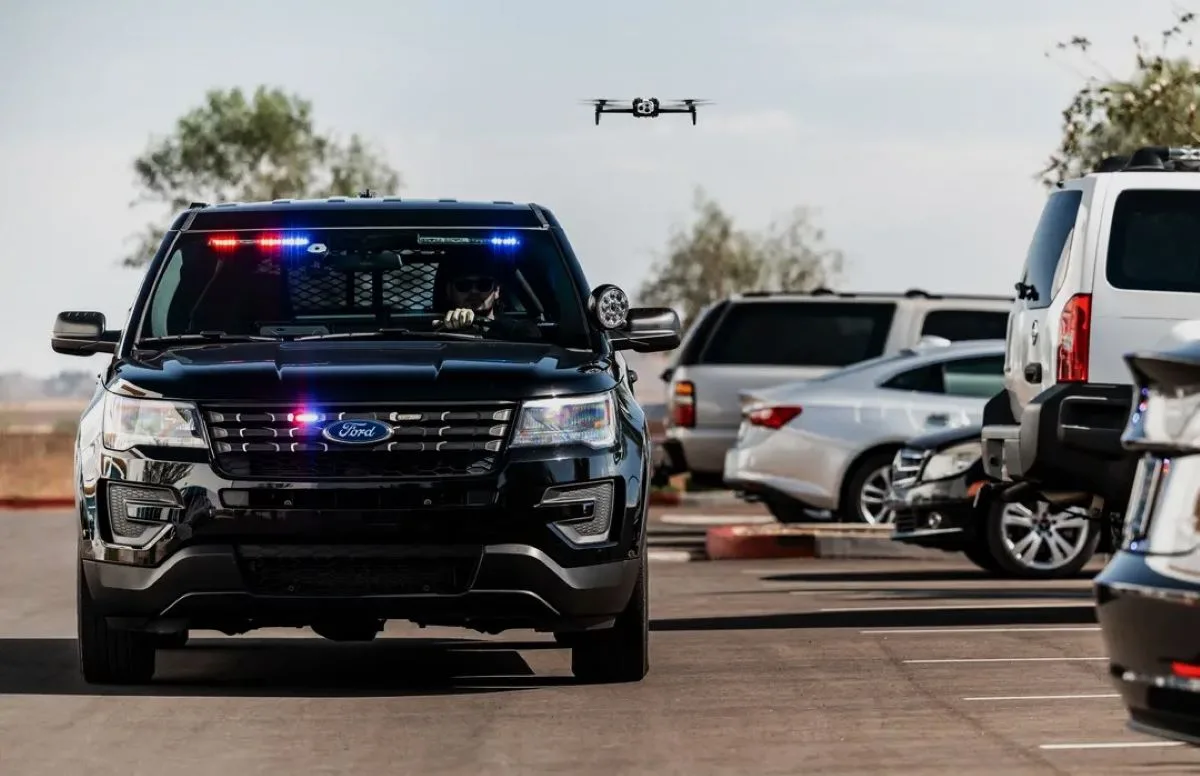
Last night, on a 4-3 vote, the Santa Ana City Council voted to purchase drones for the Santa Ana Police Department according to Santa Ana City Councilman Phil Bacerra.
Bacerra also noted that “The Council also approved the by-laws for the City’s Police Oversight Commission. Both action are great wins for public safety in Santa Ana.”
On February 3, 2026, the Santa Ana City Council reviewed a significant proposal to launch a police drone program with a nearly $683,000 contract. This follows a period of debate regarding police technology and oversight in the city.
This approval on Feb. 3, 2026, authorizes the City Manager to execute a three-year contract in an amount not to exceed $682,900. The program will be funded through state and local law enforcement assistance grants.
“This program allows the City to responsibly use technology to improve public safety while respecting community values,” Mayor Valerie Amezcua said. “Drone as a First Responder tools can help the Santa Ana Police Department respond more quickly to emergencies, gather critical information in real time, and support de-escalation efforts — all while maintaining strong oversight, transparency and protection of residents’ constitutional rights.”

The new drones will help SAPD improve response times by providing real-time observation for specific, defined incidents when needed.
Drones may be used for situations such as:
- Crimes in progress
- Missing or at-risk persons
- Armed or barricaded subjects
- Pursuits
- Identifying use of illegal fireworks
- Search and rescue
- Fire, disaster and hazardous incidents
- Large-scale incidents requiring an aerial overview
The drones are unarmed and will NOT be used for:
- A general surveillance program
- Facial recognition
- Collection of biometric data
- Continuously recording the public
- Proactive patrols without a specific incident
- Immigration enforcement
- Code enforcement
- Crowd surveillance without a qualifying public safety threat
Key Details of the Program
- Contract & Equipment: The proposed 3-year contract with Axon Enterprise, Inc. (the same vendor for body cameras) covers the purchase of five drones with varying capabilities.
- Operational Use: The Santa Ana Police Department (SAPD) intends to use the drones for “Drone as a First Responder” (DFR) operations, allowing them to arrive at emergency scenes before officers to provide real-time audio and video.
- Proposed Funding: The current contract cost has risen to $683,000, significantly higher than the initial $250,000 request discussed in late 2025.
Recent Voting History
- August 2025 Reaffirmation: In a 4-3 vote on August 19, 2025, the council reaffirmed its military equipment policy, which technically included the potential for drones. At that time, city leaders clarified that this was not yet an approval to purchase them, but a step to bring the department into compliance with state law (Assembly Bill 481).
- Community Stance: Recent polling released by the Santa Ana Police Officers Association in early February 2026 claimed 70% of voters support the use of drones to locate suspects. However, critics at council meetings have expressed strong concerns over privacy, surveillance, and the potential for facial recognition technology.
Next Steps
If you want to track the official outcome of the February 3 vote or upcoming sessions, you can:
- View the Santa Ana City Council Meeting Archive for official minutes and video.
- Check the SAPD Military Equipment Reports to see how the drone policy is integrated into their annual reporting.
As the city finalizes the $683,000 contract with Axon Enterprise, the program remains a flashpoint for debate over privacy and police oversight.
1. Proposed Privacy Safeguards
The Santa Ana Police Department (SAPD) draft policy and staff reports outline several restrictions intended to address community concerns:
- No Random Surveillance: Drones are designated as a “reactionary tool” to be deployed only for specific calls for service or emergencies, rather than for general patrol or random monitoring.
- Facial Recognition Restrictions: While the technology is controversial, SAPD officials have stated they do not intend to use facial recognition software on the drones.
- Expectation of Privacy: The policy explicitly prohibits drones from intentionally recording inside private residences or fenced yards where a “reasonable expectation of privacy” exists, unless a warrant is obtained or there are exigent circumstances.
- Data Handling: Footage will be integrated into the Axon digital evidence system (the same platform used for body cameras), which tracks every time a file is viewed or shared to maintain an audit trail.
2. The 4-3 Council Split
The council is divided into two distinct factions regarding this technology and the broader Military Equipment Policy:
| Position | Council Members | Primary Stance |
|---|---|---|
| In Favor (4) | Mayor Valerie Amezcua, Thai Viet Phan, Phil Bacerra, David Penaloza | Argue drones provide crucial “real-time intelligence,” improve officer safety, and speed up emergency response times. |
| Opposed (3) | Johnathan Ryan Hernandez, Jessie Lopez, Benjamin Vazquez | Express concerns about over-policing in a “Sanctuary City,” potential for mass surveillance, and prefer funding be directed toward community programs. |
As usual Hernandez, Lopez and Vazquez voted to protect the criminals!
Next Steps for Oversight
- Annual Reporting: Per state law AB 481, the SAPD must provide an annual report to the council detailing how the drones were used and if any policy violations occurred.
- Public Meetings: You can watch the full debate and public comments via the Santa Ana City Council Meeting Archive.
As the Santa Ana City Council moves forward with its $683,000 drone program, it follows the lead of other Orange County agencies while utilizing a different technological partnership.
1. Comparison with Neighboring Cities
Santa Ana’s program joins a growing trend of “Drone as a First Responder” (DFR) operations in the region.
| City | Program Status | Primary Objective | Key Differentiator |
|---|---|---|---|
| Santa Ana | Launching 2026 | DFR for emergency calls and fireworks enforcement. | Bundled contract with Axon for seamless integration with existing body cams/storage. |
| Irvine | Active since 2019 | Searches for suspects, missing persons, and wildfire monitoring. | Features a public-facing flight dashboard for transparency. |
| Huntington Beach | Active since 2018 | Cutting response times to under two minutes for 911 calls. | Uses automated rooftop docks across the city for remote deployment. |
| Newport Beach | Launched 2025 | Arrival at scene ahead of patrol units in nearly 70% of calls. | Employs American-made BRINC drones for increased security and compliance. |
2. Specific Drone Models
While the exact manifest of Santa Ana’s purchase is being finalized through the Axon Air platform, the contract covers five drones with varying specialized capabilities. Based on current Axon Enterprise partnerships and neighboring standards, the fleet likely includes:
- Tactical Response Models: These are small, durable drones (similar to the DJI Avata or Skydio X10) designed for indoor use or close-quarters suspect tracking.
- Heavy-Duty Thermal Models: Likely the DJI Matrice or Skydio series, equipped with 4K zoom cameras and thermal imaging for nighttime search-and-rescue or fire-related calls.
- Remote Docking Systems: To support DFR operations, the program typically includes charging docks that allow drones to launch from rooftops without an officer present at the launch site.
trash reporting by trash people
So you prefer saving the criminals?