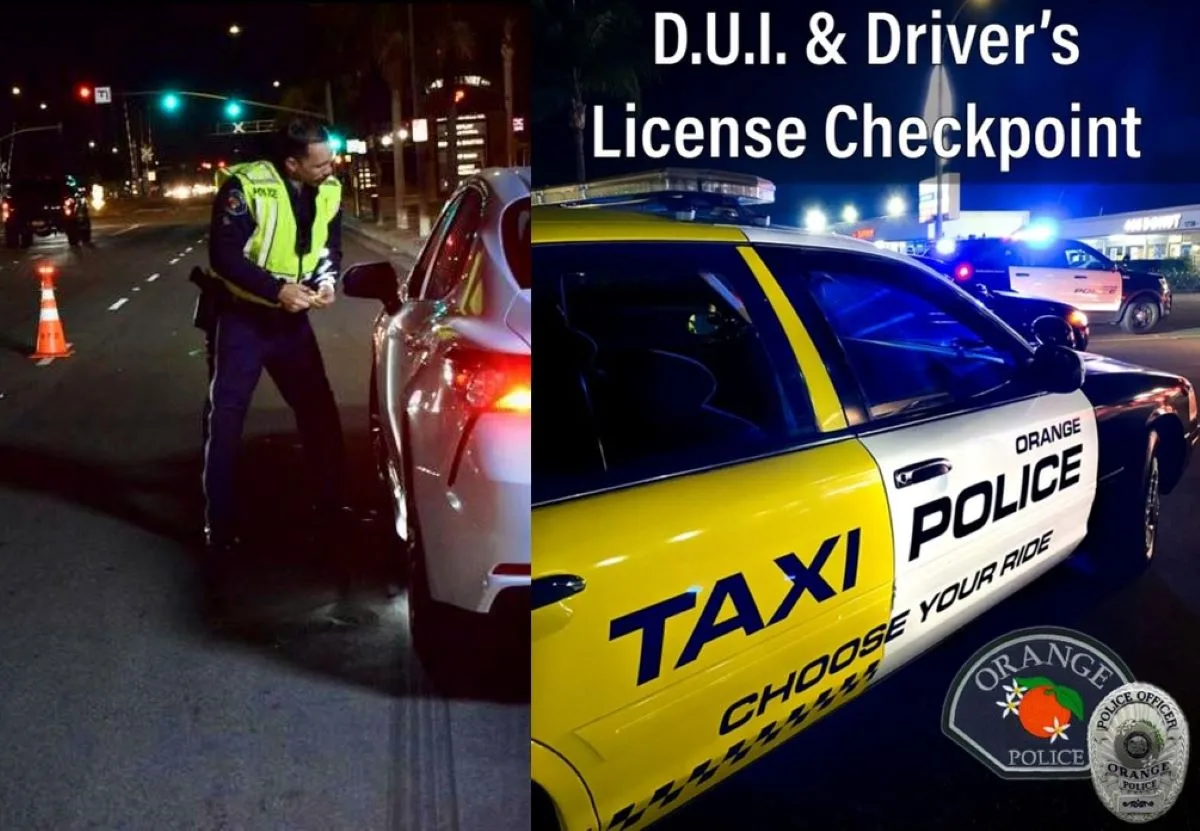
The Orange Police Department will be conducting a DUI/Driver’s License Checkpoint tonight, at 1600 N. Tustin Street, between the hours of 7:00 p.m. to 2:00 a.m.
DUI Checkpoints like this one are placed in locations based on collision statistics and frequency of DUI arrests. Officers will be looking for signs of alcohol and/or drug impairment, with officers checking drivers for proper licensing.
DUI checkpoint locations are determined based on data showing incidents of impaired driving-related crashes and frequency of DUI arrests. The primary purpose of a DUI checkpoint is to promote public safety by taking suspected impaired drivers off the road.

“Impaired drivers put others on the road at significant risk,” Sergeant David Barr said. “Any prevention measures that reduce the number of impaired drivers on our roads significantly improves traffic safety.”
The Orange Police Department reminds the public that impaired driving is not just from alcohol. Some prescription medications and over-the-counter drugs may interfere with driving. While medicinal and recreational marijuana are legal, driving under the influence of marijuana is illegal.
Drivers charged with a first-time DUI face an average of $13,500 in fines and penalties, as well as a suspended license.
Funding for this program was provided by a grant from the California Office of Traffic Safety, through the National Highway Traffic Safety Administration.
Getting arrested at a DUI and CDL checkpoint in Orange, California, carries severe legal, financial, and professional penalties as of 2025.
Legal and Financial Penalties (First Offense)
- Total Costs: The average total cost for a first-time DUI in California is approximately $13,500, which includes fines, legal fees, vehicle impound fees, and required programs.
- Fines and Fees: Court-imposed fines typically range from $390 to $1,000, but with mandatory penalty assessments and fees, the total cash outlay often exceeds $2,000.
- Jail Time: A first-time misdemeanor DUI carries a potential sentence of up to 6 months in county jail.
- License Suspension: For regular (Class C) drivers, a first-time DUI typically results in a 6-month license suspension.
- DUI School: Mandatory enrollment in a licensed alcohol or drug education program for 3 to 9 months.
- Probation: Informal “summary” probation usually lasts 3 to 5 years.
- Ignition Interlock Device (IID): You may be required to install an IID in your vehicle for at least 6 months to maintain restricted driving privileges.
Specific CDL Penalties
- CDL Disqualification: A first-time DUI conviction (even in a personal vehicle) leads to a mandatory 1-year disqualification of your commercial license. If transporting hazardous materials, the disqualification is 3 years.
- Lifetime Ban: A second DUI conviction (regardless of the vehicle driven) results in a permanent, lifetime disqualification from holding a CDL.
- Stricter BAC Limit: While the legal limit for regular drivers is 0.08%, CDL holders operating a commercial vehicle can be charged with a DUI for a blood alcohol concentration (BAC) of 0.04% or higher.
- No Restricted CDL: Unlike regular drivers, CDL holders are generally not eligible for a restricted license to operate a commercial vehicle during their suspension period.
Impact on Employment
- Job Loss: Many companies have zero-tolerance policies for DUIs, often leading to immediate termination for roles that require driving or public trust.
- Background Checks: A DUI conviction remains on your permanent criminal record and will appear on employment background checks indefinitely, making it difficult to secure new positions.
- Professional Licenses: Professionals such as healthcare workers, teachers, and lawyers may face disciplinary action or revocation of their professional licenses.
- Company Vehicle Restrictions: Most employers will lose insurance coverage for you if you have a DUI, effectively barring you from using company vehicles.
Impact on Insurance
- Skyrocketing Premiums: Post-DUI insurance rates in California typically increase by 28% to over 300%.
- SR-22 Requirement: You will be required to file an SR-22 certificate (proof of high-risk insurance) with the DMV for at least 3 years to maintain or reinstate your license.
- Loss of Discounts: You will likely lose any “Good Driver” discounts, which cannot be regained for at least 10 years following the conviction.
- Policy Cancellation: Some insurance providers may refuse to renew your policy or drop your coverage entirely, forcing you into the high-risk “non-standard” market.