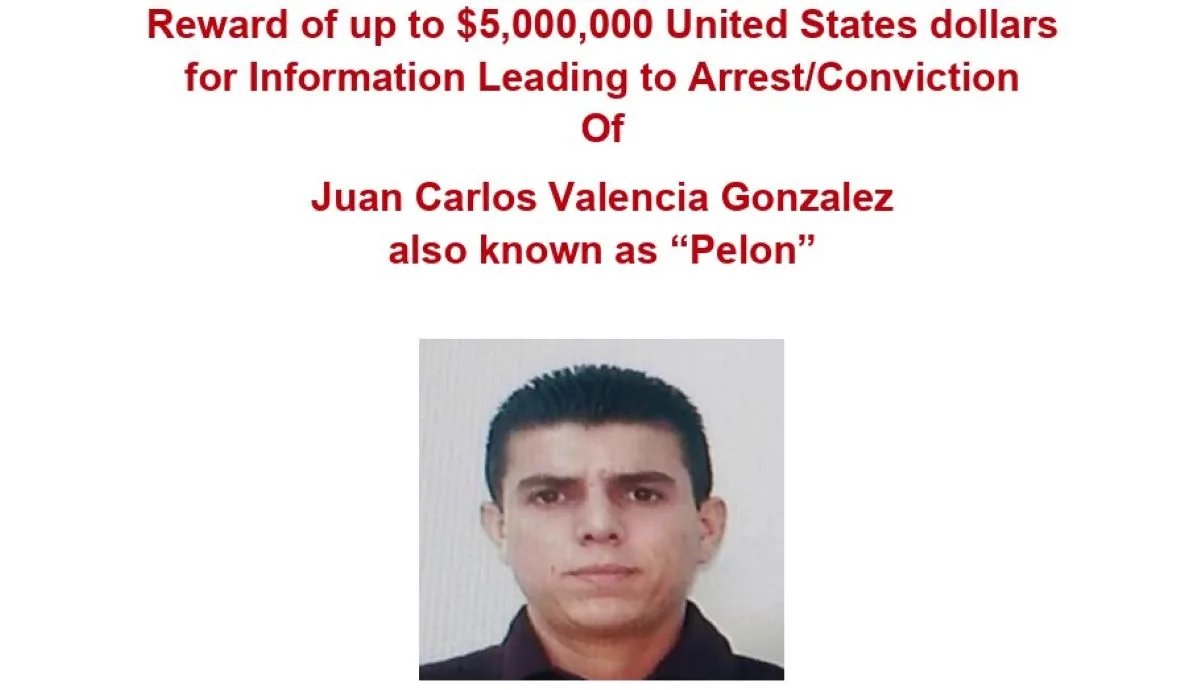
The landscape of Mexico’s drug wars has shifted violently this week following the death of Nemesio “El Mencho” Oseguera Cervantes, the long-elusive leader of the Jalisco New Generation Cartel (CJNG). As the smoke clears from a high-stakes military operation in Jalisco, all eyes have turned to his rumored successor: Juan Carlos Valencia González, a 41-year-old dual citizen born and raised in Santa Ana, California.
From Orange County to the “Elite Group”
Valencia González, known by aliases like “El Pelón,” “Tricky Tres,” and “O3,” was born in Santa Ana in 1984. While he is the stepson of the late El Mencho, his criminal lineage runs even deeper; he is the biological son of Armando Valencia Cornelio, the former head of the Milenio Cartel.
Despite his Southern California roots, Valencia González is no stranger to the brutal inner workings of the CJNG. U.S. federal officials identify him as the “de facto second-in-command” and a founding coordinator of the cartel’s “Elite Group”—a specialized armed wing notorious for its military-grade weaponry and use of weaponized drones.

The Santa Ana Connection: Fact vs. Rumor
The news that a Santa Ana native could now lead a $20 billion criminal empire has sparked intense local interest. While his birthplace is confirmed by the U.S. Department of State, current law enforcement assessments suggest his operational focus remains in Mexico.
- Gang Affiliations: There is currently no public evidence linking Valencia González to active street gang leadership or specific drug trafficking operations within Santa Ana or Orange County.
- Dual Citizenship: His status as a U.S. citizen has historically allowed him more freedom of movement, but he is now one of the world’s most wanted men, with a $5 million reward for his capture.
A Deadly Power Vacuum
The death of El Mencho on February 22, 2026, has already triggered a wave of retaliatory violence across Mexico, with blockades and vehicle burnings reported in several states. While Valencia González is the standout contender to maintain the “family business,” analysts warn he may face challenges from rival commanders or his mother, Rosalinda “La Jefa” González Valencia, who remains a powerful financial operator within the organization.
As this Santa Ana-born figure steps into the spotlight, he inherits an empire that the DEA considers the most violent and prolific trafficker of fentanyl and meth into the United States.
A Santa Ana gang works for the Mexican Mafia
The F Troop (or F-Troop) street gang in Santa Ana has long-documented connections to the Mexican Mafia (La Eme). As with most Latino street gangs in Southern California, F Troop operates under the influence and authority of the Mexican Mafia, particularly through the payment of “taxes” and following prison-dictated edicts.
Key historical and recent details regarding this connection include:
- The 1992 Peace Treaty: In January 1992, the late Peter “Sana” Ojeda, a high-ranking Mexican Mafia member from Santa Ana, organized a historic meeting at El Salvador Park to end drive-by shootings between rival gangs. Leaders from F Troop were among those present to receive these orders and establish the Mexican Mafia’s “taxation” policies on the street.
- Alfredo M. Amezcua, a prominent Santa Ana defense attorney and community leader, was a central figure in the 1992 gang peace treaty process. While he did not “negotiate” the terms between the gangs themselves—as those were dictated by the Mexican Mafia (specifically Peter “Sana” Ojeda)—he played a critical role as the legal and political advisor to the treaty’s organizational body. Amezcua’s daughter, Valerie, is now the Mayor of Santa Ana but she spent years at the O.C. Probation Department and she supports law enforcement.
- High-Ranking Affiliates: Notable F Troop members have been identified by law enforcement as actual members or high-level associates of the Mexican Mafia. For instance, Raymond “Champ” Mendez and Art Romo from F Troop were key participants in the early 1990s meetings that solidified La Eme’s control over Orange County.
- Systemic Control: Like other Santa Ana gangs (such as Delhi or Lopers), F Troop is part of a system where street-level activities—including drug distribution and extortion—are often coordinated or “green-lit” by Mexican Mafia “shot-callers” from within the Orange County jail and state prison systems.
- Recent Enforcement: Massive federal operations like Operation “Smokin’ Aces” and Operation “Black Flag” specifically targeted the “Orange County wing” of the Mexican Mafia, which includes hundreds of defendants from local gangs like F Troop.
The connection is primarily one of subordination and racketeering; while F Troop is its own independent street gang with its own territory (historically near First and Raitt streets), it pays homage and financial tribute to the Mexican Mafia to operate under their protection.
Santa Ana City Councilman Johnathan Ryan Hernandez grew up in gang culture
Councilmember Johnathan Ryan Hernandez (Ward 5) has publicly discussed his upbringing in Santa Ana’s gang culture, though he describes it through a lens of trauma, redemption, and a commitment to gang prevention rather than “bragging.”
Hernandez, who was born in 1992 and raised in the Artesia Pilar neighborhood, has shared several specific details about his background in official biographies and media interviews:
- Pervasive Gang Life: He grew up houses away from El Salvador Park, a historic hub for Santa Ana gang activity. He has stated, “All the dads were gang banging,” and recalled witnessing a drug overdose in his own backyard as a young child.
- Family Ties: He has described his absent father as a “neighborhood gang leader” and noted that many of his family members and friends “fell through the cracks” into the prison system.
- Personal Experiences: Hernandez has shared stories of being beaten for “walking down the wrong street” and needing to defend himself in a neighborhood where violence was a daily reality.
- Professional Transition: Before joining the City Council, he worked professionally in Gang Prevention and Re-Entry, serving high-risk youth in Orange County and Watts. He founded the non-profit Santa Ana Unidos in 2015, which used boxing and arts to keep children away from gangs.
- Tattoos as Narrative: He has used his tattoos to explicitly contrast his life with those of his relatives, stating that while the men in his family got tattoos to “glorify their gang life,” his own tattoos (including a rose growing from concrete) represent “redemption, perseverance, and culture”.
While Hernandez views his background as a source of “cultural competency” and a driver for his advocacy for marginalized communities, it has also been a point of friction. He is a vocal critic of the Santa Ana Police Officers Association, and some critics have suggested his “personal issues” with law enforcement stem from his upbringing.
Former boxer and MMA fighter Hernandez was beat up by two allegedly gay rappers
In August 2023, Santa Ana Councilmember Johnathan Ryan Hernandez was involved in a physical altercation with two men, one of whom was a former contract council aide and aspiring hip-hop artist.
Official city biographies state that Hernandez grew up boxing and has over 10 years of training in MMA under his belt.
While some online narratives have focused on the musical backgrounds of the men involved, official reports detail the following:
- The Incident: On August 2, 2023, Vernon Carter (33) and Danilo Delvalle (30) went to the home of Hernandez’s mother to confront him over a financial dispute. Carter, who had worked as a social media aide for Hernandez’s 2020 campaign, believed the city still owed him money.
- The Assault: The confrontation escalated into a “fistfight” that moved from the sidewalk into the street. Police reports and sources stated that the two men allegedly put Hernandez in a headlock and kicked him several times. All parties sustained minor injuries but declined medical attention at the scene.
- Arrests: Both Carter and Delvalle were arrested and charged with misdemeanor assault and battery.
- Rapper Connection: The men are indeed involved in the local hip-hop scene. Carter performs under the stage name “King Karlton,” and Delvalle is known as “Danilo Energy”. Carter has used his social media platforms to air grievances against Hernandez, alleging he was treated disrespectfully and calling the councilmember racist.
This event has contributed to the ongoing political friction in Santa Ana, as some critics have questioned
Hernandez’s professional boundaries regarding the hiring of his staff. In February 2026, Hernandez was also cleared in a separate investigation regarding allegations of harassment made by three police officers, which he maintained were retaliatory for his criticism of the department.
The City of Santa Ana has for years been trying to establish itself as something other than a crime-infested city. The news that a Santa Ana resident is now leading Mexico’s most violent cartel surely has to be deflating for the leaders at City Hall. This bad news excerbates the bad image created by a local gang’s connection to the Mexican Mafia and the embarrassment of having an anti-police City Councilman who grew up in the gangs.
So our mayor, the Mexican mafia, and sapd all support gay rights? Me too, but I was hoping to learn Juan carlos’ childhood addresses.