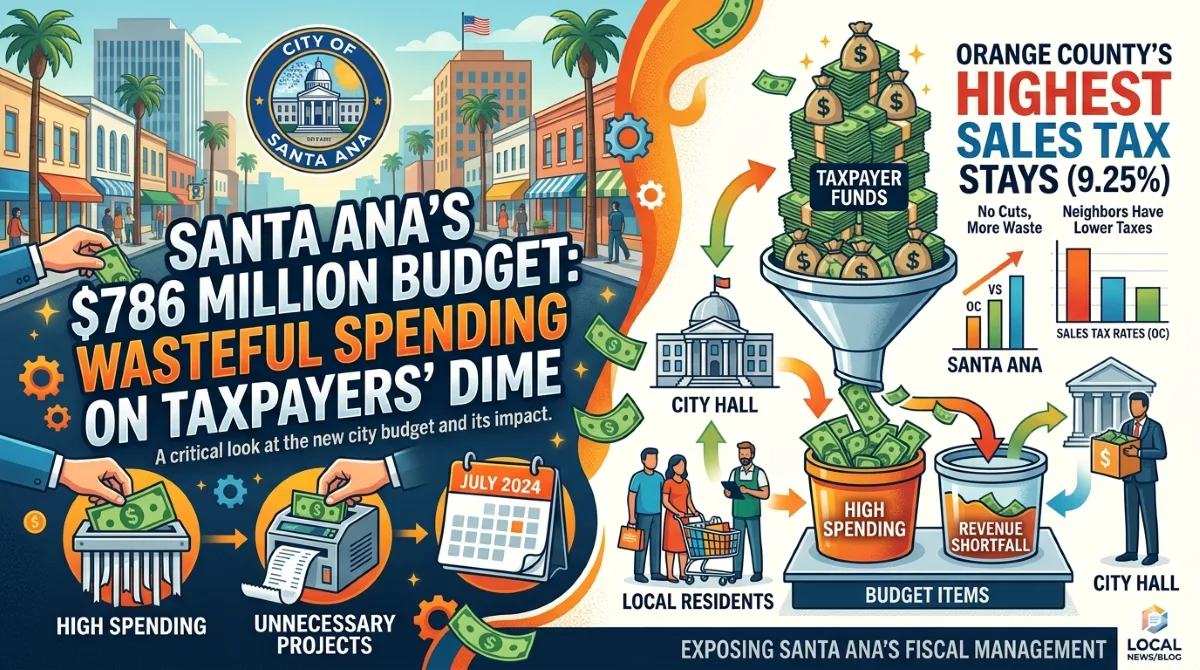
The Santa Ana City Council unanimously approved a balanced $786 million budget for the 2026-27 fiscal year on Tuesday, June 16, 2026. While city officials are spinning the $435 million general fund budget as a win for neighborhoods, a closer look reveals a troubling reality.

Instead of making tough, necessary spending cuts to fix a projected $13 million deficit, city leaders chose to maintain Orange County’s highest sales tax rate. This decision protects bureaucratic pet projects at the direct expense of local families and struggling small businesses.
The Illusion of “Strategic Investments”
City officials claim this budget reflects a commitment to the community. However, several line items raise red flags about fiscal responsibility. At a time when Santa Ana faced a $13 million shortfall, the city chose to exceed its City Charter requirement for public recreation by a staggering 49%.
While safe neighborhoods and clean parks are important, several expenditures appear highly wasteful given the current financial climate:
- $1.5 million set aside just to purchase land for a new park in Washington Square, before any development even begins.
- $250,000 dedicated strictly to a single shade structure at Edna Park.
- $3.4 million in cannabis tax revenue poured into youth programs without clear metrics on program efficiency or administrative overhead.
By treating non-essential park expansions and minor aesthetic upgrades as untouchable, the City Council missed clear opportunities to trim the fat and balance the ledger responsibly.
How Other Orange County Cities Do It Better
Santa Ana’s approach stands in stark contrast to neighboring municipalities in Orange County. Facing similar post-inflationary economic pressures, other local cities have managed their budget gaps through strict fiscal discipline rather than relying on aggressive taxation.
Cities across the region have successfully balanced their books by delaying non-essential capital projects, optimizing internal city staffing, and renegotiating vendor contracts. These cities understand that a budget crisis requires internal tightening, not external squeezing of the local economy. Santa Ana, on the other hand, chose to protect its full-time headcount and expand discretionary projects, leaving taxpayers to foot the bill.
High Sales Tax: A Double Blow to Residents and Businesses
By failing to make deep cuts, Santa Ana forces its community to endure a punishing 9.25% sales tax—the highest in Orange County. Keeping this tax rate artificially high to fund an inflated budget creates a hostile economic environment.
- For Residents: Sales taxes are regressive. They disproportionately hurt working-class families who must pay more for everyday essentials, from clothing to household goods, cutting directly into their household savings.
- For Area Businesses: Santa Ana retailers are placed at a severe competitive disadvantage. Shoppers looking to make major purchases can easily drive a few miles to neighboring cities with much lower tax rates, draining vital revenue away from Santa Ana’s local commerce.
The Bottom Line
Santa Ana had a choice: cut the waste or keep the tax burden heavy. By choosing the latter, the City Council has protected the status quo at City Hall while passing the financial pain down to the community.
They’re all corrupt.