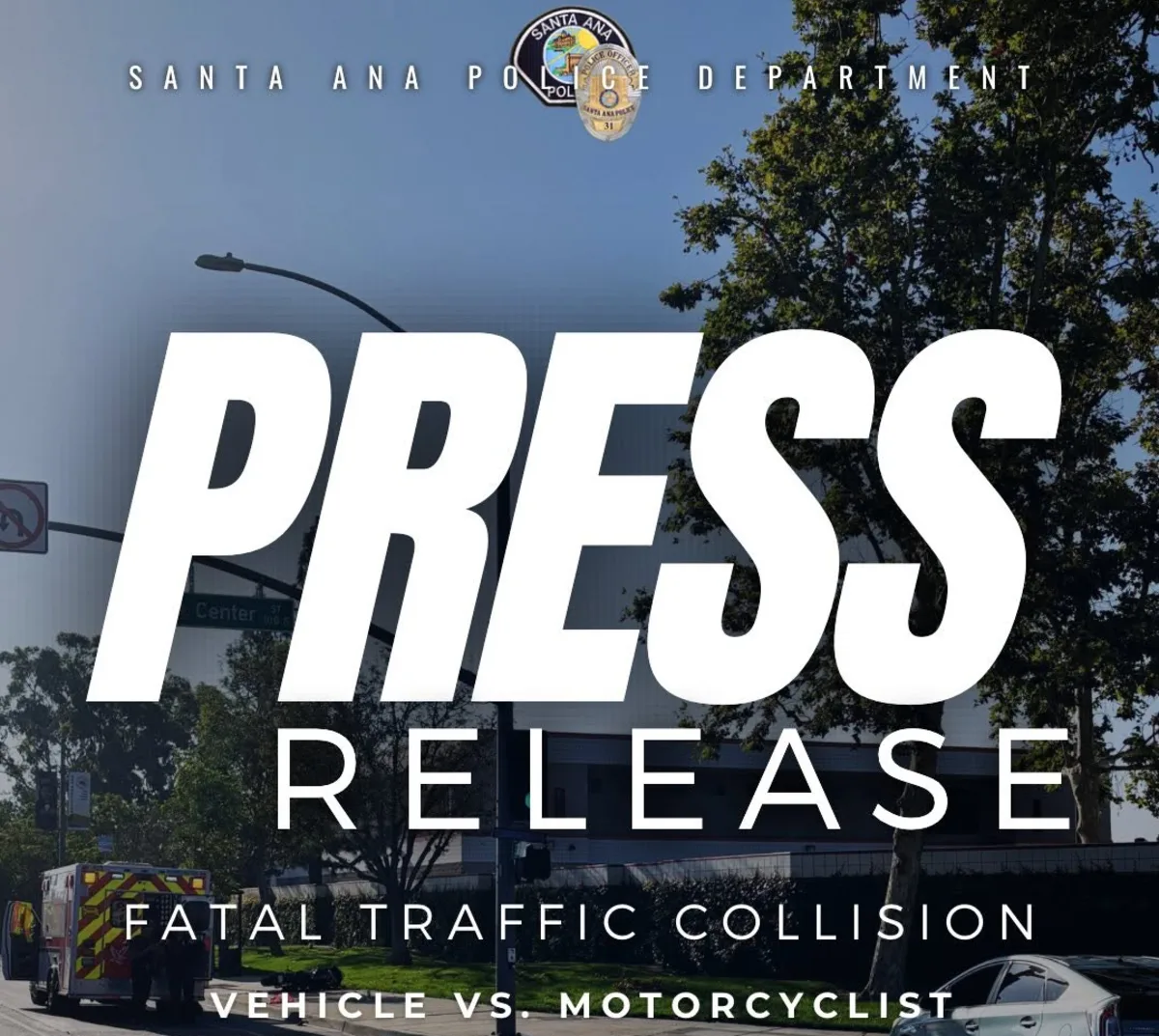
On January 14, the Santa Ana Police Department released details about a tragic July 14, 2026 collision that claimed the life of 43‑year‑old Calvin Williams of Costa Mesa.

At approximately 7:02 a.m., officers and the Orange County Fire Authority responded to First Street and Center Street after multiple callers reported a vehicle–motorcycle crash.
Williams was found in the roadway with severe upper‑body trauma and was pronounced dead at the scene despite lifesaving efforts.
Investigators say Williams had been riding eastbound on First Street when a vehicle in the adjacent lane made a lane change, striking his motorcycle and ejecting him. The driver remained at the scene, cooperated with police, and showed no signs of impairment. The Santa Ana Police Department’s Collision Investigation Unit continues to investigate, and anyone with information is urged to contact Detective Corporal M. Pardo at 714‑245‑8208 or the Traffic Division at 714‑245‑8200.
Motorcyclist Fatalities in Orange County
Orange County consistently records some of the highest motorcycle fatality numbers in California due to dense traffic, high speeds, and a large rider population. According to CHP and county collision data, Orange County averages 35–45 motorcycle fatalities per year, with hundreds more seriously injured. Recent examples include:
- A 2025 Irvine crash where a rider was killed after a driver failed to yield while making a left turn.
- A 2024 Huntington Beach collision involving a speeding driver who struck a motorcyclist in an intersection.
- A 2026 Anaheim incident where a rider died after being rear‑ended in morning traffic.
These cases mirror the same pattern seen in Williams’ death: lane changes, left turns, and visibility issues remain the leading causes of fatal motorcycle crashes.
How Motorcyclists Can Stay Safe
While riders cannot control the behavior of drivers, they can reduce risk through consistent defensive habits:
- High‑visibility gear — Bright jackets, reflective tape, and LED helmet lights make riders more noticeable.
- Lane positioning — Staying out of blind spots and choosing positions that maximize visibility.
- Speed management — Maintaining speeds appropriate for traffic and conditions.
- Advanced rider training — Courses that teach evasive maneuvers and hazard anticipation.
- Helmet quality — DOT or Snell‑rated helmets significantly reduce fatal head injuries.
How Drivers Can Avoid Hitting Motorcyclists
Most fatal motorcycle collisions are caused by drivers, not riders. Auto drivers can prevent tragedies by:
- Checking blind spots before lane changes.
- Using turn signals early to give riders time to react.
- Avoiding distractions such as phones or infotainment systems.
- Looking twice at intersections — Motorcycles are smaller and often hidden behind pillars or other vehicles.
- Maintaining safe following distances to avoid rear‑end collisions that are often fatal for riders.
Insurance and Legal Consequences for Drivers
A fatal collision involving a motorcyclist carries severe financial and legal repercussions for the driver, even if criminal charges are not filed.
- Insurance impact: A fatal at‑fault crash typically triggers premium increases of 40–100%, policy cancellation, or mandatory high‑risk SR‑22 coverage.
- Civil lawsuits: The likelihood of being sued is extremely high. Families often pursue wrongful‑death claims, which can exceed $1 million depending on lost income, medical costs, and emotional damages.
- Criminal exposure: Even without impairment, drivers may face charges such as vehicular manslaughter if negligence is proven.
Community Reminder
Williams’ death underscores the vulnerability of motorcyclists and the responsibility drivers carry every time they change lanes or enter an intersection. Santa Ana Police continue urging both riders and drivers to stay alert, slow down, and treat every roadway interaction as potentially life‑saving.