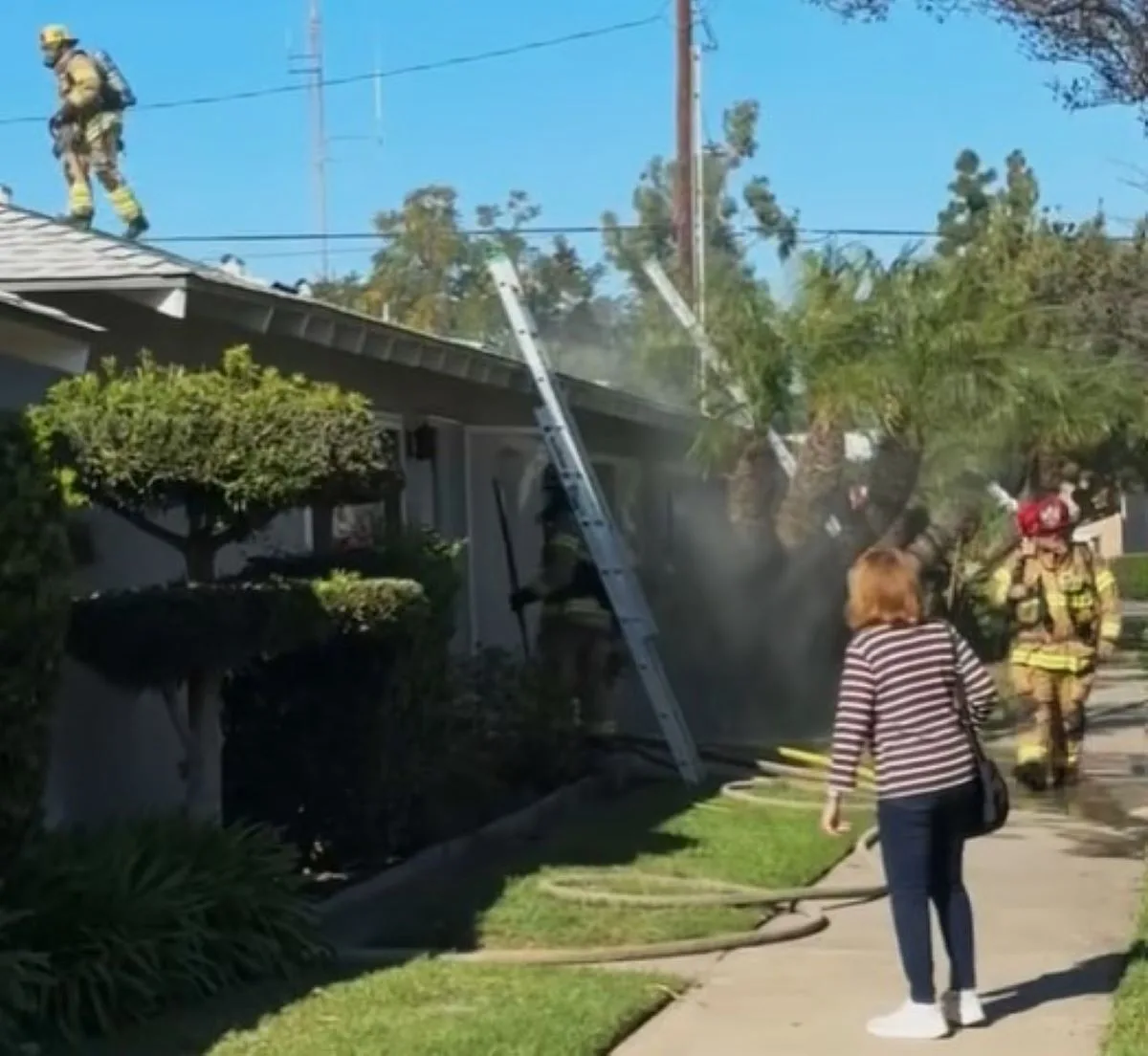
Quick action by neighbors and a UPS driver saved a 101-year-old woman from a kitchen fire this afternoon in Santa Ana, according to the Orange County Fire Authority (OCFA).
After neighbors saw smoke, they rushed to the woman’s home, pounded on the door, and tried to help her exit safely. When she hesitated, they asked a nearby UPS driver for help, who picked her up and carried her to safety.
At the same time, the neighbors used fire extinguishers to knock down the kitchen fire. One of them, a roofer by trade, grabbed his ladder, climbed to the roof, and used a garden hose to spray water into the kitchen vent.

Firefighters quickly arrived, extinguished the remaining fire that had spread into the attic, and transported the woman to the hospital for evaluation.
A remarkable outcome made possible by quick action, teamwork, and people looking out for one another in a moment of need.
The OCFA thanked the Orange City Fire and Santa Ana PD for the assistance.
What Caused the Fire?
While the specific cause of this January 2026 fire in Santa Ana is still under official investigation by the Orange County Fire Authority (OCFA), kitchen fires in residential settings typically stem from a few common factors.
1. Most Likely Causes (Based on General Fire Data)
- Unattended Cooking: Nationally, unattended cooking is the leading cause of kitchen fires. For elderly residents, even a few minutes of distraction or a brief lapse in memory can lead to food or grease igniting.
- Grease Buildup: Residue on stovetops or in range hoods is highly flammable. If this grease ignites, it can quickly spread to kitchen vents and into the attic, as was seen in this incident.
- Flammable Items Near Heat: Objects such as dish towels, paper packaging, or wooden utensils left too close to a burner can easily catch fire.
- Electrical Malfunction: Faulty or aging appliances—such as toasters, microwaves, or slow cookers—can short-circuit or overheat.
2. Specific Factors in This Incident
- Attic Spread: The fire was reported to have spread through the kitchen vent into the attic. This often happens when a stovetop fire is large enough to be sucked into the ventilation system, especially if there is significant grease accumulation in the ductwork.
- Resident Confusion: Reports noted the 101-year-old resident was “confused” and hesitated to leave. In older adults, a reduced ability to quickly recognize danger or react to smoke can lead to delayed suppression or evacuation.
3. Kitchen Safety for Seniors
To prevent similar incidents, the OCFA and other safety organizations recommend:
- Automatic Shut-off Devices: Installing devices that cut power to the stove after a set period of inactivity.
- Regular Cleaning: Keeping range hoods and exhaust fans free of grease to prevent fire extension into the walls or attic.
- Accessible Equipment: Keeping a fire extinguisher nearby and ensuring the resident knows how to use it.
The quick intervention of neighbors—using fire extinguishers and a garden hose—was credited with knocking down the main fire before OCFA crews arrived to finish the job in the attic.
That’s remarkable to have saven the elderly lady at 101. Kudos to the UPS driver, bravo