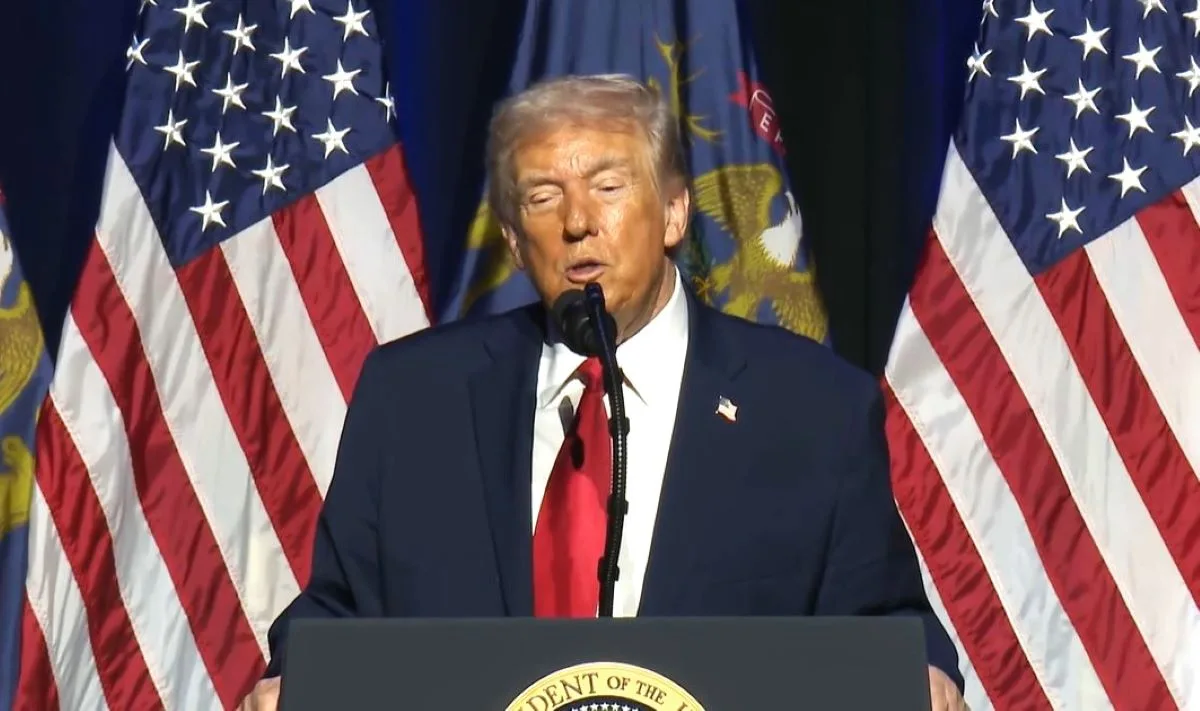
On January 13, 2026, President Trump announced during a speech at the Detroit Economic Club in Michigan that his administration will cease all federal payments to “sanctuary” cities and states containing them, effective February 1, 2026.
Official Sources and Details
- White House Statement: A summary of his remarks and the policy shift can be found in the White House article titled Back in Michigan, President Trump Celebrates Auto Industry, Economic Revival.
- Announcement Context: Trump stated the freeze is necessary because these jurisdictions “do everything possible to protect criminals at the expense of American citizens” and that the sanctuary status breeds “fraud and crime”.
- Scope of Impact: The funding freeze could potentially yank billions in revenue from designated jurisdictions. As of August 2025, the Justice Department identified 12 states—including California, Illinois, and New York—and 18 major cities as sanctuary jurisdictions subject to these cuts.
- Related Directives: This follows an Executive Order signed in April 2025 intended to enforce federal law regarding sanctuary jurisdictions.
Legal experts and current court rulings suggest that challenges to the administration’s funding freeze may prevail in lower courts, though the ultimate outcome at the U.S. Supreme Court remains uncertain.
The primary legal conflict centers on whether the Executive Branch has the authority to unilaterally impose new conditions on federal funds that were originally authorized by Congress.

Arguments Supporting Sanctuary Cities
Many legal scholars argue the funding freeze is unconstitutional based on several established principles:
- Separation of Powers: Only Congress has the “power of the purse.” Experts argue the President cannot add new immigration-related conditions to grants (such as housing or law enforcement funds) that Congress did not explicitly include in the law.
- Anti-Commandeering (10th Amendment): Supreme Court precedents like New York v. United States (1992) and Printz v. United States (1997) establish that the federal government cannot “commandeer” state or local officials to enforce federal regulatory programs, such as immigration.
- Non-Coercion: The Supreme Court held in NFIB v. Sebelius (2012) that federal funding conditions cannot be so sweeping that they become “coercive,” effectively leaving states with no choice but to comply.
Current Legal Status (as of January 2026)
- Preliminary Injunctions: As of August 2025, U.S. District Judge William Orrick issued a preliminary injunction blocking the administration from withholding funds from 34 cities and counties, including Chicago, Los Angeles, and Boston.
- Scope of Rulings: In June 2025, the Supreme Court limited the power of federal judges to issue “nationwide injunctions.” Consequently, only jurisdictions specifically named in active lawsuits currently benefit from these court protections.
- Administration Defiance: Despite these rulings, President Trump stated on January 13, 2026, that he intends to move forward with the freeze on February 1, potentially leading to a direct confrontation with the judiciary.
Outlook at the U.S. Supreme Court
While lower courts have consistently ruled against these types of funding freezes, the conservative-leaning Supreme Court has recently shown a greater willingness to use its “shadow docket” to stay lower court rulings and allow administration policies to proceed while appeals are pending. If the case reaches the high court, the justices will have to decide if the administration’s actions are a lawful exercise of executive authority or an unconstitutional overreach into powers reserved for Congress and the states.
Trump is also targeting Santa Ana, CA
As a declared sanctuary city in a sanctuary state, Santa Ana, California, is directly targeted by the Trump administration’s funding freeze scheduled for February 1, 2026.
While Santa Ana was notably missing from some early 2025 Department of Justice (DOJ) sanctuary lists, it remains at high risk due to its local policies and its location within California.
Impact on Santa Ana
- Targeted Status: Santa Ana reaffirmed its commitment to sanctuary policies in July 2025, including a resolution to provide emergency assistance to families impacted by federal immigration enforcement.
- State-Level Targeting: Because California is one of the five “sanctuary states” (along with New York, Illinois, Colorado, and Minnesota) specifically targeted for broader funding freezes, Santa Ana will be affected by cuts at both the municipal and state levels.
- Specific Program Freezes: In January 2026, the administration announced a freeze on $10 billion in social services and child care funding for these five states, citing “fraud” related to benefits for non-citizens. This includes programs like Head Start, which serves thousands of low-income families in Southern California.
Local Response and Legal Standing
- Proactive Defense: In February 2025, Santa Ana sought a legal firm to manage its $300,000-a-year deportation defense fund, signaling its intent to actively resist federal enforcement efforts.
- Litigation: On July 15, 2025, Santa Ana joined a federal lawsuit alongside other California cities (such as Pasadena and West Hollywood) to challenge what they described as “unconstitutional” immigration enforcement actions.
- Current Legal Protections: Although the administration intends to stop payments on February 1, 2026, a federal judge issued a temporary injunction on January 9, 2026, blocking the freeze of child care and social service funds in targeted states, including California.