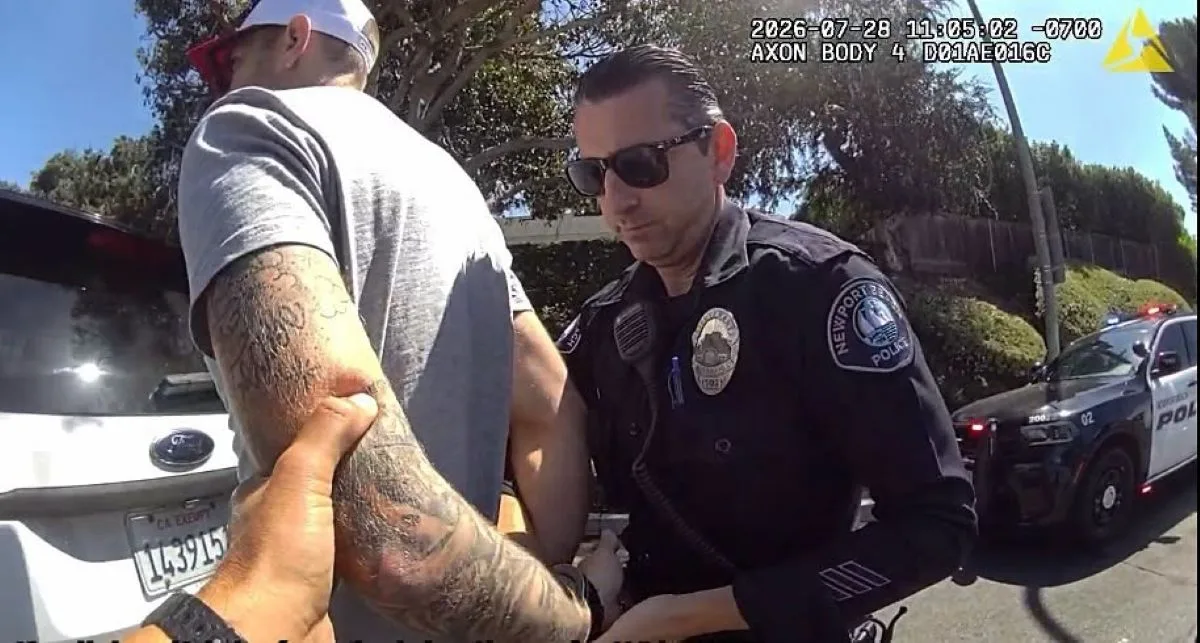
The Newport Beach Police Department safely apprehended a suspect after a targeted traffic stop led to the recovery of a stolen U-Haul truck and illegal narcotics.

NBPD officers located the moving truck within the city limits shortly after receiving an automated alert regarding the stolen vehicle, which had been reported overdue since June. The driver was taken into custody without incident, eliminating both a stolen vehicle and illegal drugs from the community through tactical teamwork and law enforcement technology.
Criminal Charges and Severe Financial Penalties
As the suspect enters the legal system, they face a severe combination of criminal penalties, administrative fees, and collateral financial impacts under California law.
Because the vehicle was an overdue rental reported stolen, the individual faces felony or misdemeanor charges under California Vehicle Code Section 10851 (unlawful taking or driving of a vehicle) or California Penal Code Section 496d (possession of a stolen vehicle).
If prosecuted as a felony, the prison sentence ranges from 16 months to three years, accompanied by court-ordered restitution to U-Haul for the vehicle’s unreturned period, plus base court fines up to $10,000.
Additionally, the discovery of narcotics adds charges under California Health and Safety Code Section 11350 or 11377 for unlawful possession, adding up to a year of jail time and thousands more in assessments.
Beyond criminal fines, the suspect is civilly liable to the rental company for thousands of dollars in compounding late fees, vehicle recovery expenses, and potentially the full market value of the commercial vehicle if it sustained damage.
High-Risk Insurance Impact and Premium Spikes
Operating a stolen vehicle drastically damages an individual’s auto insurance profile. While standard auto theft victims in California do not see premium spikes under comprehensive coverage claims, an individual arrested for driving a stolen vehicle becomes classified as a high-risk driver.
Upon conviction, the offense stays on a California DMV record for at least three to five years. This eliminates any “Good Driver” discounts and forces the individual into non-standard high-risk insurance markets, where they must obtain an SR-22 financial responsibility filing.
Consequently, their auto insurance premiums can spike by 70% to well over 100%, adding thousands of dollars in cumulative annual surcharges once their driving privileges are legally restored.
Orange County Auto Theft Trends and Traffic Stop Data
This successful apprehension highlighting the utility of proactive police stops comes during a notable shift in broader regional and state-level auto theft trends.
Data from the California Highway Patrol indicates that vehicle thefts across California dropped by roughly 25% year-over-year. Local enforcement and regional crime suppression operations have driven overall property crime downward across Southern California.
This arrest highlights how routine traffic stops frequently serve as a vital tool for uncovering deeper criminal acts, such as commercial vehicle theft and illegal drug distribution.
Statistically, while a majority of traffic stops result in standard citations, a crucial percentage directly lead to the execution of outstanding warrants, the seizure of weapons, and felony arrests that remove volatile threats from public roads.
Legislative Friction and California Traffic Stop Debates
Despite their proven effectiveness in public safety, proactive traffic stops remain a point of legislative friction within the California State Capitol.
A subset of Democratic lawmakers has repeatedly attempted to pass measures, such as Senate Bill 50, aimed at making it illegal for police officers to pull over drivers or bicycle riders for low-level infractions like a single broken tail light, improper license plate positioning, or expired registration.
Proponents of these restrictions argue they are necessary to protect civil rights and reduce racial disparities in policing.
Conversely, law enforcement groups, including the California State Sheriffs’ Association, argue that restricting these stops eliminates a vital investigative tool.
They emphasize that minor equipment violations frequently provide the initial lawful contact necessary for officers to identify impaired drivers, detect stolen vehicles, and execute high-impact criminal arrests like the one executed by Newport Beach officers.