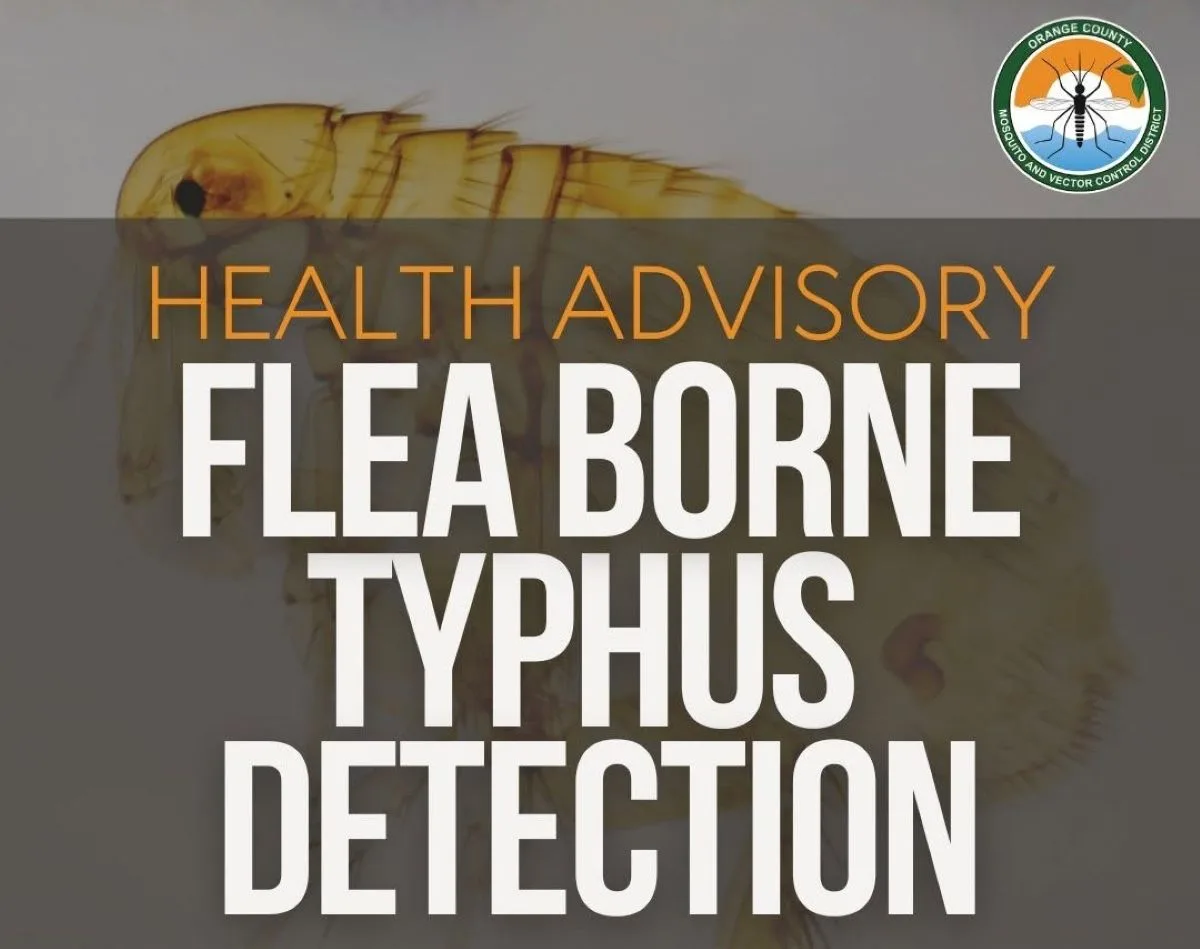
The Orange County Mosquito and Vector Control District (OCMVCD) has issued a public warning regarding an increased risk of flea-borne typhus in the City of Santa Ana. This potentially fatal bacterial disease is primarily transmitted by fleas living on wildlife and domestic animals, prompting local health officials to urge residents to take immediate preventive action to protect their households and pets.

Typhus Trends in California and Orange County
Flea-borne typhus is considered endemic to Southern California, meaning it is constantly present in the region. State data reveals a concerning rise in cases over recent years:
- Statewide Surge: According to the California Department of Public Health (CDPH), California recorded 256 cases in 2024 and 243 cases in 2025. Neighboring Los Angeles County hit a record-breaking 220 cases in 2025 alone.
- Orange County Historical Context: While Orange County went through a long stretch with zero reported cases between 1993 and 2006, the disease has since reemerged. Over the past decade, the county has seen steady, persistent transmission, generally fluctuating between 11 and 39 cases annually.
- Recent Localized Outbreaks: Orange County has tracked localized clusters across multiple cities. In recent years, cases have popped up in Fountain Valley, Anaheim, Garden Grove, and Fullerton—which experienced a localized spike of three cases in early 2026.
How the Disease Spreads
The infection is caused by the bacteria Rickettsia typhi or Rickettsia felis. It lives inside fleas that infest feral or domestic cats, dogs, opossums, rats, raccoons, skunks, squirrels, and rabbits.
Transmission to humans does not usually happen through the flea bite itself. Instead, fleas defecate while they feed. When a person scratches the itchy bite area, they accidentally rub the infected flea feces (flea dirt) into the broken skin, open wounds, or even their eyes. The disease is not contagious and cannot spread from person to person.
Symptoms and Severe Health Repercussions
Symptoms of flea-borne typhus typically appear within one to two weeks after exposure. Early signs can easily mimic a severe flu and include:
- High fever and chills
- Severe headaches
- Body aches and muscle pain
- A distinct rash, usually spreading across the chest, back, or sides
- Nausea and vomiting
If left untreated, flea-borne typhus can lead to severe health repercussions. Recent health alerts indicate that nearly 90% of infected individuals require hospitalization due to the severity of the illness. Severe complications can include organ system failure, swelling of the brain lining (meningitis), heart valve infections (endocarditis), and septic shock. While deaths are rare (occurring in less than 1% of treated cases), the disease can be fatal if diagnosis is delayed.
Treatment and Medical Care
Flea-borne typhus is highly treatable with antibiotics. The standard, most effective treatment of choice is doxycycline. Doctors emphasize that early diagnosis is critical; starting antibiotics quickly dramatically reduces the risk of severe complications and hospital stays. If you develop a sudden fever, headache, and rash—especially after being around outdoor areas or animals—you should seek medical care immediately and mention any potential flea exposure to your provider.
Crucial Steps for Prevention
Because there is no vaccine available for typhus, prevention relies entirely on eliminating contact with fleas. The Orange County Mosquito and Vector Control District advises all residents to follow these safety steps:
- Protect your pets: Keep cats and dogs on a veterinarian-approved flea control medication year-round.
- Avoid stray wildlife: Do not touch, pet, or feed stray cats, opossums, or other neighborhood wild animals.
- Remove food sources: Never leave pet food outdoors overnight, as it attracts rodents and wildlife hosts.
- Maintain your property: Keep yards clear of debris, clutter, and woodpiles where animals might hide.
- Trim landscaping: Keep plants and bushes trimmed back to eliminate overgrown brush where fleas thrive.
- Secure your trash: Keep all garbage in heavy-duty containers secured with tightly fitted lids.
If you suspect a flea infestation or notice unusual wildlife activity on your property, contact local vector control for guidance. For more detailed information on local cases and prevention measures, visit the OCMVCD Flea-Borne Typhus Resource Page.