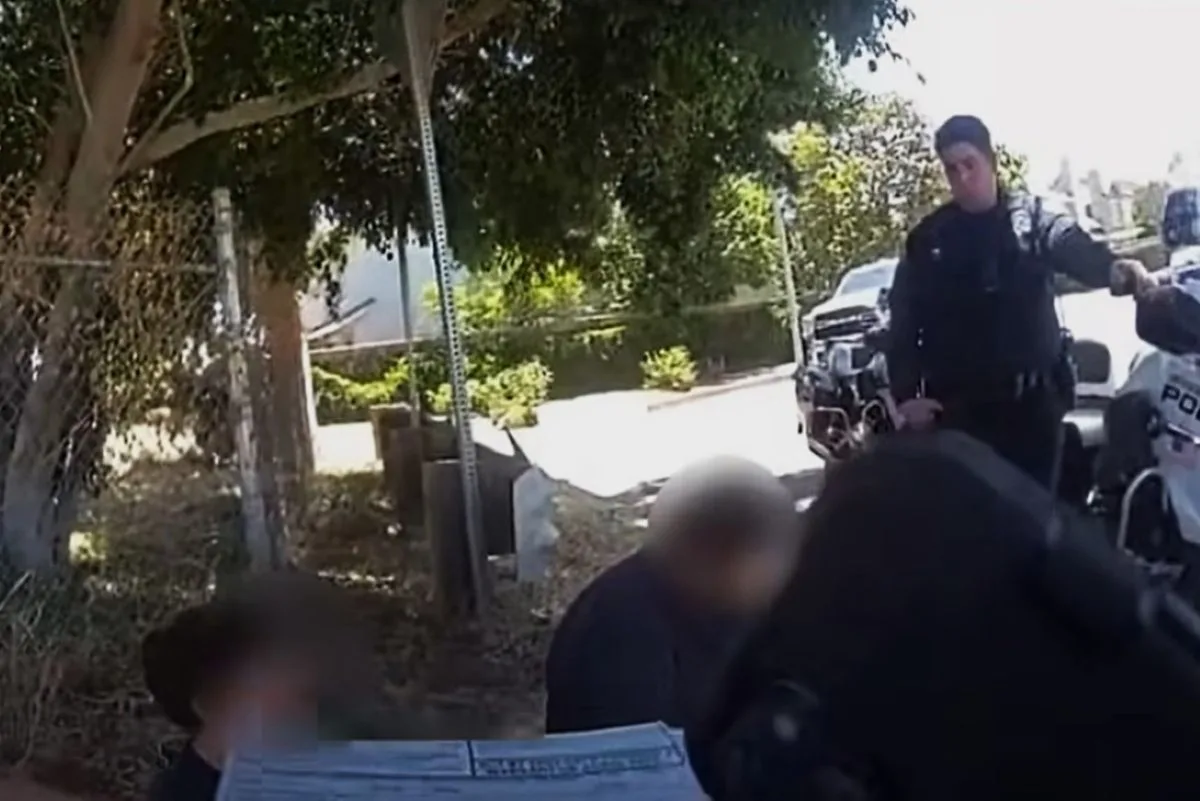
What started as a quick escape from an Orange Police Department Motor Officer at Grijalva Park ended as a textbook lesson in the rules of the road. The suspect, who attempted to flee on an illegal electric motorcycle, was quickly apprehended, hit with nine separate citations, and watched their vehicle get hauled away on a flatbed tow truck.

For local riders and parents, this high-profile stop is a stark reminder that testing the speed of local law enforcement comes with a massive price tag. In Orange County, operating an unclassified electric motorcycle or a heavily modified e-bike on public paths triggers severe legal, financial, and criminal consequences.
The True Cost of Nine Citations and an Impound
Fleeing from a law enforcement officer changes a standard traffic stop into a criminal matter, leading to a primary misdemeanor charge of evading a peace officer. On top of that criminal charge, the nine individual citations issued by the Orange Police Department carry compounding financial penalties.
California court-ordered assessments frequently triple the base price of traffic fines, pushing the total court bill for nine violations anywhere from $1,500 to $3,000. Because the vehicle was classified as an illegal motorcycle, it was also impounded. A standard 30-day police impoundment in Orange County adds $150 to $300 for the initial tow and $50 to $100 per day in storage fees, making vehicle retrieval cost up to $2,000.
Parents Face Felony Charges and Severe Civil Liability
The Orange County District Attorney’s Office has launched a specialized RIDE SAFELY Unit to aggressively crack down on the parents of underage riders who operate illegal e-motorcycles. Parents who purchase these high-powered vehicles for their children or knowingly allow them to ride on public streets face felony child endangerment or even involuntary manslaughter charges if a fatal crash occurs, which carry up to six years in state prison.
Beyond the criminal courtroom, the financial risks for parents are devastating. Under California Civil Code Section 1714.1, parents are automatically held civilly liable for up to $45,000 per incident for property damage or personal injuries caused by their minor children. Furthermore, if a parent knowingly provides an illegal, unregistered vehicle to an unlicensed child, they can be sued for negligent entrustment, exposing the family to millions of dollars in personal injury lawsuits without any statutory caps.
The Insurance Void: Why Families Are Left Unprotected
Many parents mistakenly assume their existing insurance policies will cover a neighborhood e-bike or e-moto mishap. In reality, standard homeowners and renters insurance policies explicitly exclude liability coverage for any motorized land vehicles capable of exceeding 20 to 28 mph or vehicles operating without pedals. When a crash occurs, insurance providers completely deny the claim, leaving the family personally responsible for all medical bills and property damage.
Auto insurance policies offer no protection either, as they only cover registered vehicles specifically listed on the policy declaration page. Additionally, if a minor receives a traffic misdemeanor like evading or reckless driving, it creates a permanent DMV record. When that teenager eventually attempts to get a standard driver’s license, their future auto insurance premiums will skyrocket, or they will be forced into high-risk insurance pools for several years.
Knowing the Law: What Makes an E-Bike Legal in OC?
To legally ride an electric two-wheeled vehicle on Orange County roads, paths, and parks, the vehicle must strictly fit into one of California’s three legal e-bike classifications:
- Class 1: Pedal-assist only; the electric motor assists up to 20 mph and then cuts off. There is no age limit for riders.
- Class 2: Throttle-assisted; the motor can propel the bike up to 20 mph without pedaling. There is no age limit for riders.
- Class 3: Pedal-assist only; the motor assists up to 28 mph, and the bike must have a speedometer. Riders must be at least 16 years old and wear a helmet.
Every legal e-bike must also feature fully operable pedals, an electric motor of 750 watts or less, a permanently affixed manufacturer classification label, and a red rear reflector or built-in flashing rear light.
Vehicles made by brands like Sur-Ron, Talaria, or Segway, as well as e-bikes with altered speed limiters, exceed 750 watts and fly past the 28 mph threshold. These are classified as mopeds or motorcycles under state law. It is entirely illegal to ride them in Grijalva Park, on sidewalks, or on public trails. To use them legally on public roadways, the rider must possess a valid M1/M2 motorcycle license, register the vehicle with the DMV, display a license plate, carry liability insurance, and wear a DOT-approved helmet.
A Public Health Emergency: The Orange County Accident Crisis
The surge in illegal e-motos and modified e-bikes has triggered an unprecedented spike in severe traffic injuries across the region. Data from the Children’s Hospital of Orange County (CHOC) reveals that pediatric e-bike and e-moto injuries treated at their trauma center skyrocketed from just 1 case in 2021 to 201 cases in 2025—a staggering 20,000% increase over a four-year period.
Regionally, the Orange County District Attorney’s Office reports that e-bike and e-moto related injuries have surged 430% across Southern California over the last four years. Hospital records show that children aged 11 to 14 account for 61.7% of all e-motorcycle crashes, despite being legally barred from riding them. Trauma doctors report that the orthopedic and neurological injuries sustained in these crashes mirror high-speed automobile accidents, frequently involving multi-organ trauma and complex fractures that require permanent surgical metal implants.
The message from the Orange Police Department and local officials is clear: obey the rules, know what your kids are riding, and help keep local parks safe and enjoyable for everyone.