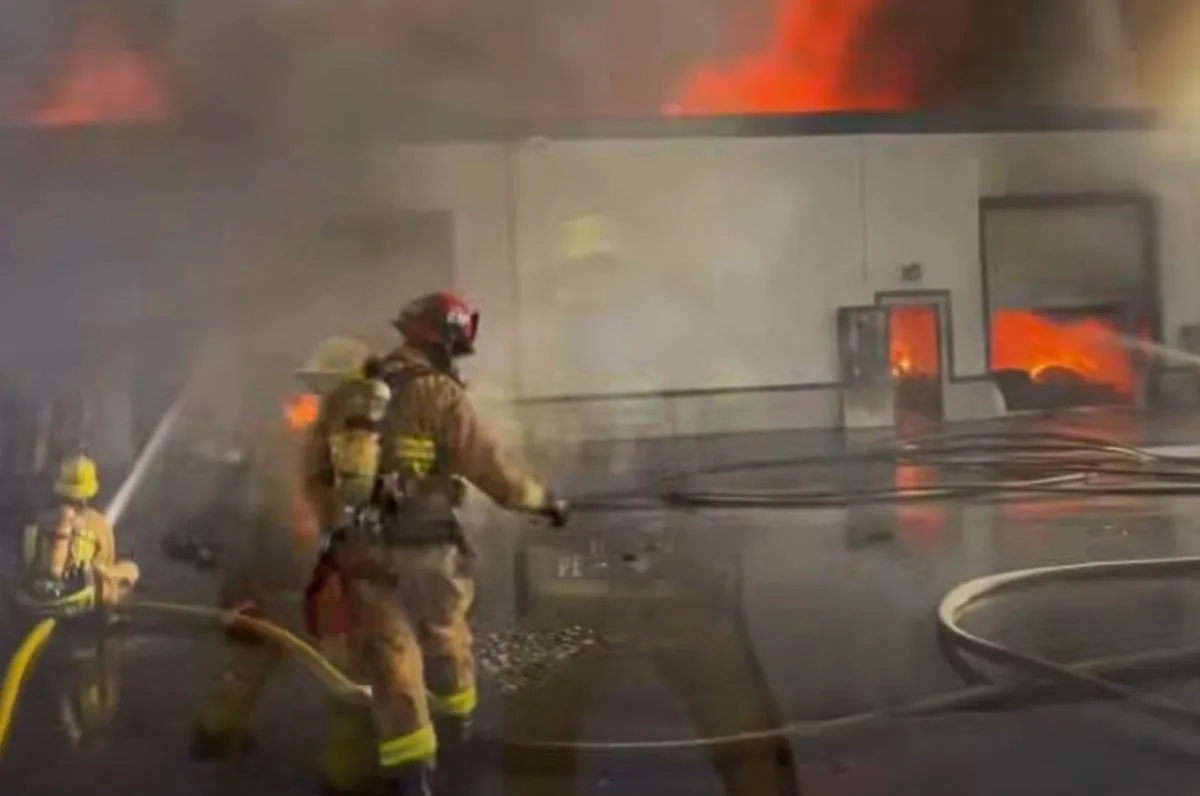
A massive 3-alarm structure fire tore through a single-story industrial building in Santa Ana last night, drawing a heavy emergency response to the 3200 block of W. MacArthur Boulevard.

The Orange County Fire Authority (OCFA) dispatched approximately 80 firefighters who launched an aggressive attack to contain the fast-moving flames. While the fire completely engulfed and heavily damaged one industrial unit, the rapid, coordinated actions of the responding crews successfully protected and saved an adjacent business housed within the same structure.
First-arriving units, including Engine 77 and Truck 76, were met with heavy smoke and intense fire showing from the commercial complex. As ground crews deployed multiple hose lines for an aggressive interior and exterior assault, firefighters climbed to the roof to perform strategic defensive strip ventilation cuts. This specialized tactic effectively opened up sections of the roof, releasing trapped heat and gases to stall the lateral spread of the flames. Investigators later confirmed the fire was entirely accidental, pinpointing the cause to the spontaneous combustion of wood-staining rags left inside the business.
Estimated Fire Damage and Losses
While fire authorities have not yet published an official dollar amount for this specific incident, commercial fires of this size generally incur high costs. Based on similar industrial complex fires handled by the OCFA, a 3-alarm blaze involving heavy fire extension inside a manufacturing or industrial space typically results in an estimated loss ranging from $500,000 to over $1.5 million in structural damage and machinery, inventory, and equipment contents. Fortunately, no injuries to civilians or emergency personnel were reported.
Spontaneous Combustion Trends in Orange County
Fires triggered by spontaneous combustion—specifically from oil- and solvent-soaked rags—are a persistent hazard across Orange County’s commercial and industrial sectors. The OCFA responds to thousands of fires annually, with commercial structure fires making up a critical portion of property loss incidents. Industrial areas across Santa Ana, Anaheim, and Irvine see regular occurrences of these chemical-reaction fires because businesses frequently use linseed oil, wood stains, and volatile solvents without realizing how easily they trap heat. When these rags are piled up, the organic oils undergo an oxidation process that generates heat; if the heat cannot escape, it builds up until the materials reach their ignition point and spontaneously burst into flames.
How Businesses Can Prevent Spontaneous Combustion Fires
Commercial operations, automotive shops, and manufacturing facilities can easily eliminate the risk of spontaneous chemical fires by enforcing strict hazardous material disposal protocols. The OCFA and safety experts recommend that local businesses adopt the following preventative habits:
- Use Approved Metal Containers: Always place soiled, oily, or stain-soaked rags into OSHA-approved, self-closing metal containers immediately after use.
- Submerge Rags in Water: Fill disposal containers with a solution of water and detergent to completely submerge the cloths, preventing the oxidation process.
- Lay Rags Flat to Dry: If containers are unavailable, spread the rags out individually on a non-combustible outdoor surface away from buildings to let the oils dry safely without trapping heat.
- Keep Rags Out of Piles: Never bundle, stack, or throw oil-soaked rags into standard plastic trash bins or laundry piles.
- Schedule Frequent Disposal: Ensure hazardous waste bins are emptied regularly by professional hazardous waste disposal services to avoid overfilling.