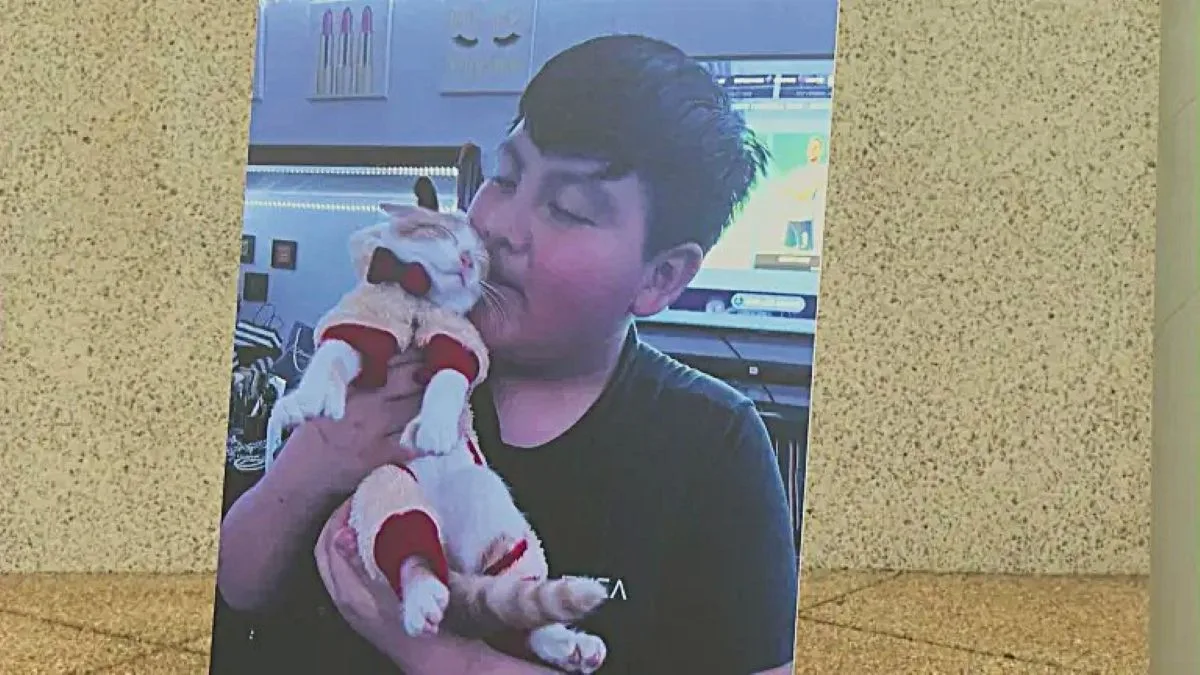
The heartbreaking death of 15-year-old Jaden Michaca in Santa Ana, California, has reignited an urgent national conversation: When a loved one is experiencing a severe mental health crisis, is calling 911 too dangerous?

On June 14, 2026, Santa Ana police officers shot and killed Michaca inside his family’s apartment. The department stated that officers responded to a “family feud” call after the mother’s boyfriend reported that Michaca was under the influence, damaging property, and had stabbed him with a knife. Upon arrival, officers forced entry and shot the teenager, who they claim was still armed and non-compliant.
However, at a gut-wrenching press conference, Jaden’s mother, Maribel Michaca, alongside civil rights attorneys Luis and Michael Carrillo, announced a legal claim against the city of Santa Ana. The family contends that Jaden was experiencing a severe bipolar mental health crisis. They claim they explicitly requested a Psychiatric Emergency Response Team (PERT) and begged officers not to shoot, but “trigger-happy” police opened fire anyway, hitting Jaden 7 to 8 times and even injuring his mother’s hand.
The Police Dilemma: The Risk of High-Emotion Calls
While families view these incidents as medical emergencies, responding officers frequently view them through the lens of survival. Historically, data compiled by organizations like the Dolan Consulting Group shows that domestic disturbance and behavioral crisis calls are highly volatile. When a physical assault on an officer does occur during a domestic call, the officer has a 50/50 chance of sustaining an injury requiring medical treatment.
Furthermore, according to FBI Law Enforcement Officers Killed and Assaulted (LEOKA) data, the largest percentage of officer assaults occurs while responding to disturbance calls, which encompass domestic disputes. Because substances or weapons are frequently present, officers enter these scenes on hyper-alert, which can unfortunately escalate a mental health crisis into a fatal shooting.
What Families Can Do Instead of Calling the Police
If a family member is acting out but you do not want law enforcement to handle the situation with lethal weapons, experts suggest exploring community-based, non-police alternatives first:
- Dial 988: The 988 Suicide & Crisis Lifeline connects you to trained counselors who specialize in de-escalation, not law enforcement.
- Request a Mobile Crisis Team (MCT): Many cities have Mobile Crisis Teams comprised of community mental health professionals who respond directly to homes without police involvement.
- Utilize Community Respite Centers: If it is safe to transport the individual, taking them to a local psychiatric urgent care or drop-off center bypasses the traumatic 911-to-jail-or-hospital pipeline.
- Explicitly Demand Co-Responders: If you must call 911 due to immediate physical danger, firmly and repeatedly request a Co-Responder Team (CRT) or mental health clinician to lead the interaction.
The Michaca family’s legal claim asserts that the department was aware of the psychiatric history involved due to previous mental health holds, yet de-escalation tactics were not effectively deployed. As this case moves forward, it stands as a reminder of the ongoing challenges within emergency response systems when addressing mental health crises.