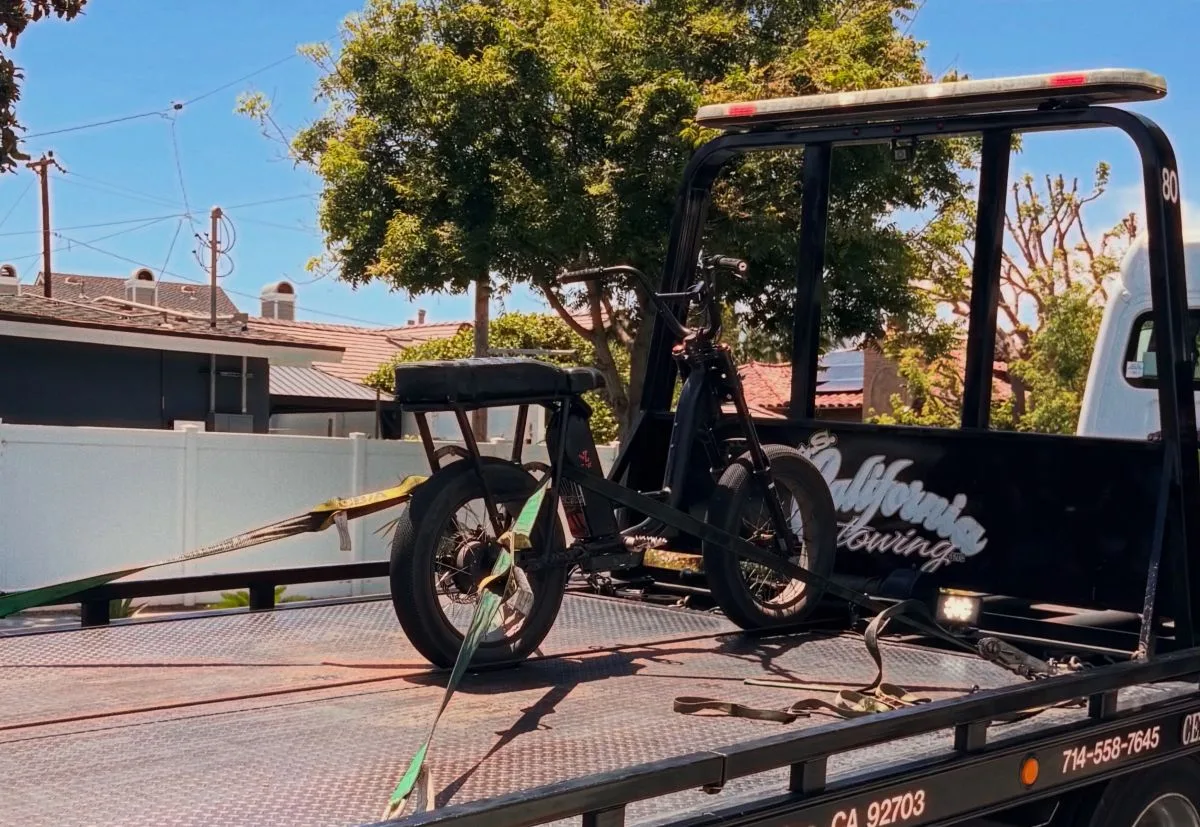
Earlier this week, an Orange County Sheriff’s Department North Patrol Deputy conducted a traffic stop on a juvenile operating a modified electric bike in the City of Rossmoor.

During the investigation, it was determined the vehicle had been altered and no longer met California’s legal definition of an e-bike.
The rider was cited for multiple vehicle code violations, and the vehicle was impounded. Further investigation revealed the vehicle had previously been reported stolen and was recovered as a result of the stop.
The impounded vehicle is a Super73-Z Series electric bike—specifically matching the distinct open frame geometry, low-slung banana seat, and thick 20-inch fat tires of the Super73-Z Miami.
Vehicle Breakdown & Cost
- Make: Super73
- Model: Z Miami (or Z-Series variant)
- Retail Cost: A brand new, stock Super73-Z Miami typically ranges between $2,145 USD and $2,445 USD depending on the specific trim and promotional pricing.
As e-bikes continue to grow in popularity, parents are encouraged to regularly inspect their children’s bikes for modifications and ensure they comply with California law. Riders should obey all traffic laws, wear a properly fitted helmet, and operate their bikes safely to help prevent collisions, injuries, and enforcement action.
Criminal Charges and Legal Penalties
Modifying an e-bike to override speed limiters or adding high-powered motors triggers severe legal consequences. Under California law, an altered e-bike that exceeds statutory limits is reclassified as a moped, motorcycle, or off-highway vehicle (OHV).
- Vehicle Code Violations: Operating a reclassified vehicle without the proper equipment can result in citations for driving an unregistered vehicle, riding without a valid driver’s license, and driving without proof of insurance.
- Mandatory Towing and Impoundment: Under California Assembly Bill 875, law enforcement has the authority to immediately impound Class 3 e-bikes or illegal e-motos ridden by minors, carrying a minimum 48-hour hold and steep towing fees.
- Criminal Possession: Because the vehicle in this stop was altered and stolen, operating it can lead to severe criminal charges for the rider, including felony possession of stolen property.
Parental and Civil Liability
The legal responsibilities and financial risks do not stop with the juvenile rider; they extend directly to the parents and guardians.
- Criminal Liability for Parents: The Orange County District Attorney’s Office recently launched the RIDE SAFELY unit to explicitly prosecute parents who knowingly allow their children to ride illegal, high-powered e-motos on public roads. Parents in Orange County have already been hit with felony involuntary manslaughter charges after their children caused fatal collisions on illegal electric devices.
- The Insurance Coverage Gap: Legal e-bikes generally do not require auto insurance, but modified e-bikes fall into a dangerous insurance trap. Standard auto insurance policies will not cover an e-bike crash because the bike is not a listed vehicle. Concurrently, standard homeowners or renters insurance policies strictly exclude “motor vehicles” from liability coverage. If a modified e-bike is legally reclassified as a motor vehicle, the insurance carrier will likely deny the claim, leaving the family personally liable for six-figure medical bills or personal injury lawsuits.
Orange County E-Bike and E-Moto Crime Data
The crackdown comes amid a sharp rise in regional electric vehicle incidents. According to data tracking from the Children’s Hospital of Orange County (CHOC), e-bike injuries among children skyrocketed from just 7 cases in 2019 to 116 cases in 2024, becoming a leading cause of pediatric traumatic injuries in the county. The Orange County District Attorney’s Office reports that emergency room visits and injuries have spiked 430% over a four-year period across Southern California, with children between 11 and 14 years old accounting for nearly 62% of all e-motorcycle crashes.
What is Legal in Orange County?
To keep your kids safe and avoid vehicle impoundment, ensure your family’s electric devices fit into the three approved California e-bike classes. Any vehicle exceeding these metrics is considered an e-moto or motorcycle and is completely illegal for minors to operate on public roadways, sidewalks, or bike trails.
- Class 1 (Pedal-Assist): Features a motor that provides assistance only when the rider pedals. It ceases assistance when the bike reaches 20 mph. Anyone of any age can ride a Class 1 e-bike.
- Class 2 (Throttle-Assisted): Features a motor controlled by a throttle that can propel the bike without pedaling. It ceases assistance when the bike reaches 20 mph. Anyone of any age can ride a Class 2 e-bike.
- Class 3 (Speed Pedal-Assist): Features a motor that provides assistance only when the rider pedals, up to a maximum speed of 28 mph. Riders must be at least 16 years old and must wear a helmet at all times, regardless of age.
- Illegal E-Motos: Brands or modifications that allow a bike to exceed 750 watts of motor power, or go faster than 28 mph, remove the bike from the legal e-bike framework. These vehicles are classified as motorcycles, requiring registration, specialized insurance, a M1/M2 driver’s license, and are entirely banned from sidewalks and bike paths.