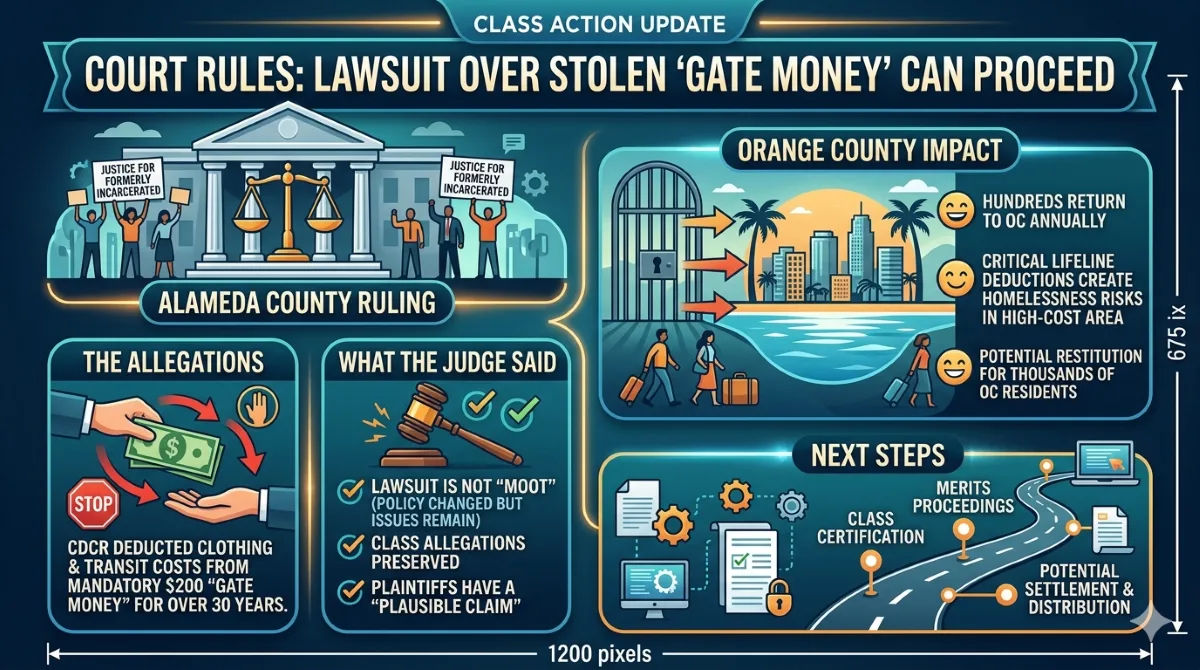
In a significant win for formerly incarcerated Californians, an Alameda County Superior Court judge has cleared the way for a major class action lawsuit against the California Department of Corrections and Rehabilitation (CDCR) to proceed.
The case, Scholl v. CDCR, challenges a decades-long practice of deducting clothing and transportation costs from the $200 “gate money” that state law requires be given to every person upon their release from prison.
The Ruling at a Glance
Issued on April 1, 2026, the ruling rejected CDCR’s attempts to dismiss the case or strike the class allegations. Key points include:
- No “Mootness”: Though CDCR recently changed its policy to stop these deductions following the lawsuit’s filing, the judge ruled the case is not “moot” because the agency still claims its past actions were legal and could theoretically reinstate them.
- Class Action Status: The court preserved the class allegations, meaning the lawsuit can seek relief for hundreds of thousands of people shortchanged over the last 30 years.
- Legal Duty: The judge found the plaintiffs have a “plausible claim” that CDCR exceeded its authority by dipping into these funds to cover its own expenses.
Why This Matters in Orange County
While the ruling happened in Alameda County, its impact will be felt deeply across Orange County.
- Local Impact: As of 2021, more than 5,000 people from Orange County were in the state prison system. With roughly 30,000 people released from California prisons annually, hundreds return to OC cities like Santa Ana, Anaheim, and Fullerton every year.
- The Reentry “Lifeline”: For many returning to Orange County—one of the most expensive regions in the country—that $200 is a critical “lifeline” for the first 72 hours. In a county where a studio apartment can cost upwards of $2,000, losing half of that gate money to “clothing fees” can be the difference between a bus ticket home and immediate homelessness.
- Potential Restitution: If you or a loved one were released from a CDCR facility any time since 1994 and received less than the full $200, you may eventually be eligible for a portion of the restitution sought in this case.
What’s Next?
The case now moves toward class certification and merits proceedings, where the court will decide exactly how much the state owes those it shortchanged (p. 2). Estimates suggest the total could reach into the millions for former residents across the state.